Icons & Asterisks: The Battle for Basketball Supremacy
2025-12-30
Who's the GOAT?
Throughout NBA history, the debate over the Greatest of All Time (GOAT) has remained one of the most passionate discussions. Rather than a clear-cut answer, the GOAT question reflects a very complicated evolution of eras, rules, and values, with each player having a unique claim to the throne, as well as notable asterisks that keep the debate alive. What one fan values as greatness might differ from another's. Is the crown earned by Michael Jordan's unblemished Finals record? LeBron James' longevity and all-around numbers? Kareem Abdul-Jabbar's massive career totals? Stephen Curry's revolutionary impact on the modern game? Or Kobe Bryant's relentless "Mamba mentality"? In the end, choosing a GOAT is much about personal values and perspective as it is about statistics or rings.
Advanced Metrics Explained
For the analytically inclined, advanced statistics can offer an extra lens through which we can compare greatness. Here are a few key metrics often referenced in GOAT debates, and the ones we'll unpack throughout this article:
-Player Efficiency Rating (PER): An all-in-one rating of a player's per-minute statistical production. It adds up a player's positive stats (points, rebounds, etc), and subtracts their negatives (missed shots, turnovers, etc), and then adjusts for pace of the game. A higher PER indicates better productivity.
-Win Shares (WS) and WS/48: Win Shares estimate the number of wins a player contributes to his team. It divides credit for a team win among players based on their offensive and defensive contributions and playing time. Win Shares per 48 minutes (WS/48) is a version which shows the win shares a player produces per 48 minutes.
-Box Plus/Minus: Box Plus/Minus is used to estimate a player's overall impact on team performance per 100 possessions using only box score data. It is relative to league average and is position-adjusted. A higher box plus/minus means a player improves their team's performance more.
-Value Over Replacement Player (VORP): VORP is a cumulative stat that measures a player's value compared to a hypothetical "replacement-level" player. It is derived from Box Plus/Minus, scaled by the minutes played and adjusted relative to replacement level. A higher VORP means a player has provided more value.
Advanced statistics provide additional context for comparing legends beyond simple things like points, rebounds, and accolades. With these tools in mind, let's dive into the five candidates and see how each makes their GOAT case.
1. Michael Jordan: Air Jordan

Image via NBA.com
Arguments for Michael Jordan:
When fans refer to Michael Jordan as the GOAT, it often comes down to his perfection at the highest level. Jordan didn't just excel in the sport, but he redefined the sport's popularity and standards. His NBA Finals record stands at 6-0, achieved via two separate "three-peats" (1991-93 and 1996-98) with the Chicago Bulls. He was the Finals MVP all six times, never even allowing a Finals Game 7. Individually, Jordan amassed 5 NBA MVPs, 6 Finals MVPs, a Defensive Player of the Year award, and a record-breaking 10 scoring titles, showcasing his offensive and defensive dominance.
At his peak, he was essentially the league's best scorer and one of its best defenders simultaneously. Statistically, he has the highest career scoring average in NBA history (30.1 points per game), and also tops the all-time lists with a 27.91 PER and .2505 WS/48, the best ever recorded for a career. He was also the sport's biggest global icon leading the league in jersey sales and elevating the NBA's popularity worldwide.
Arguments against Michael Jordan:
For a player deemed "flawless," Jordan's case isn't without any negatives. To start, he struggled to win early in his career, going 1-9 in the playoffs before Scottie Pippen became his teammate. In fact, Jordan's Bulls lost more games than they had won in every season until Pippen arrived. Another asterisk is the gap in his prime: Jordan retired twice in the 90s (1993 and 1998) while still playing at an MVP level. Those nearly five seasons of absence hurt his career totals in points, assists, etc., compared to other players like Kareem or LeBron.
Despite having ten scoring titles, Jordan would finish his career fifth all-time in points with 32,292. It's also noted that Jordan's teams, once he had championship help, were extremely well-built and coached, which reminds us that basketball is a team game. In summary, while Jordan's peak was arguably the greatest ever, the question is whether 15 seasons of excellence outweigh other players' 20+ seasons of greatness.
2. LeBron James: The King
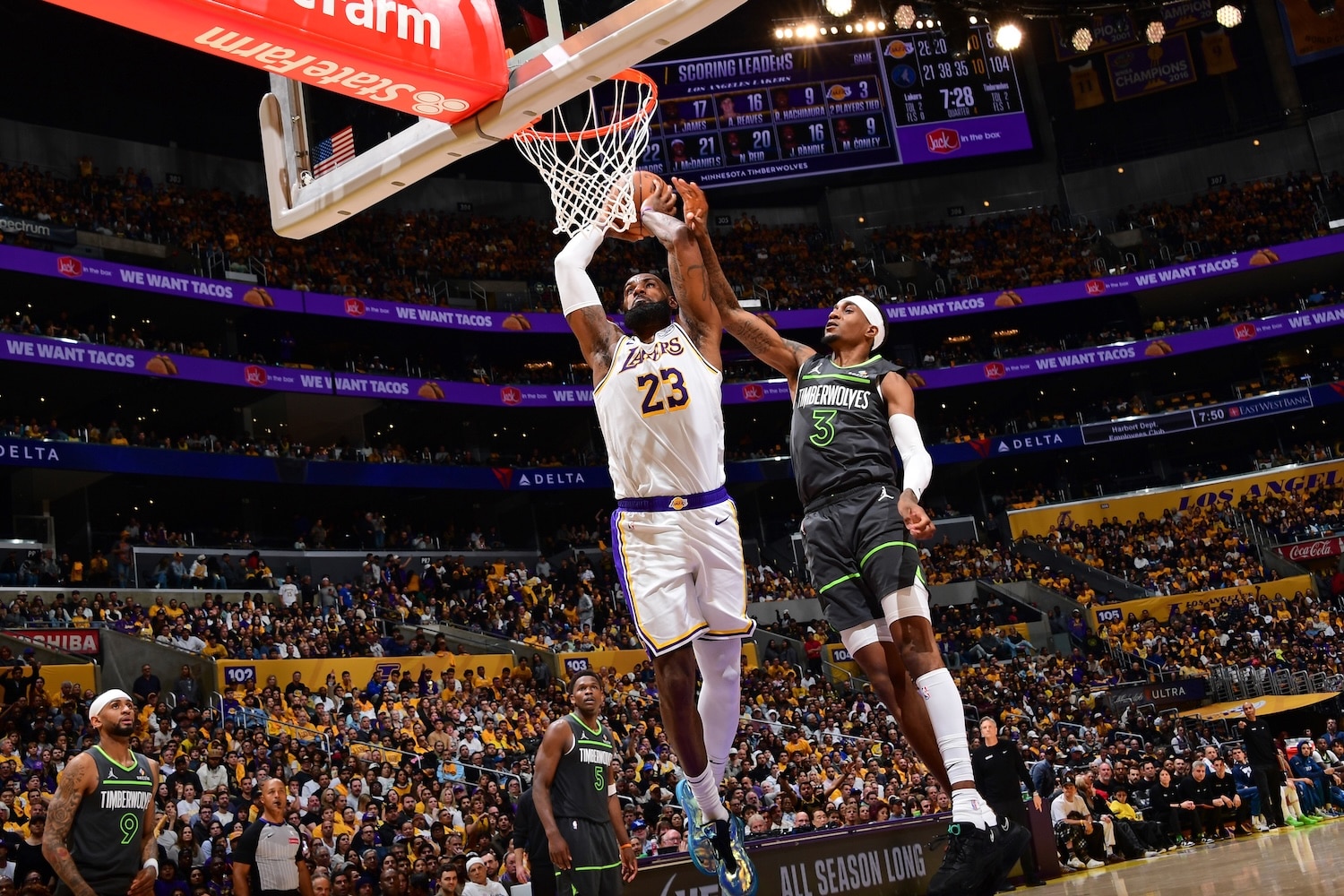
Image via NBA.com
Arguments for LeBron James:
LeBron James is often noted as the most complete basketball player in history. His case is mainly built on extraordinary longevity and versatility. Now in his 21st NBA season (and still going), LeBron has racked up career numbers that may never be seen again. He is the NBA's all-time leading scorer, ranks 4th in career assists, and ranks 6th in career steals in NBA history. As of this article, LeBron is also 6th in three-pointers made, and 2nd in total field goals made. These numbers showcase James' all around impact: he scores, creates for his teammates, and even adapted to the modern NBA's 3 point volume. He has 4 NBA championships, 4 Finals MVPs, 4 NBA MVPs, and a record 19 All-NBA First Team selections.
Advanced metrics also adore LeBron: he owns the highest VORP ever recorded (~157), indicating he's provided more cumulative value than any player in the modern era. His career Box Plus/Minus is among the top few all-time, and he is top five in PER (~27). LeBron has also sustained a scoring average of 25+ points per game for 19 straight seasons, an unprecedented run of elite production. His fans will point out that no one has ever been this good, for this long with such a complete skillset.
Arguments against LeBron James:
The biggest blemish on LeBron's GOAT resume is often cited as the 2011 NBA Finals. In that series, his heavily favoured Miami Heat fell to the Dallas Mavericks in six games. LeBron only averaged 17.8 points, and had a notorious 8 point meltdown in Game 4. Coming up short on the biggest stage raised questions about his clutch consistency early in his prime. Unlike Jordan's perfect Finals record, LeBron has lost on the biggest stage six times, and holds a 4-6 Finals record. Notably, he was swept in the Finals twice (2007 and 2018), something Jordan never experienced. Critics also note that even though LeBron's longevity is unparalleled, he has accumulated fewer championships and accolades in more seasons than some legends.
Another common critique is the perceived need for star teammates. LeBron formed "superteams" in Miami (with Dwyane Wade and Chris Bosh), where he would end up winning two rings with the Miami Heat. Of course, every player needs help, but skeptics argue that James had a direct hand in assembling these rosters to a greater degree, often stripping teams to the bone to work around his timeline. These factors give ammunition to those who place other players ahead of LeBron James.
3. Kareem Abdul-Jabbar: The Captain
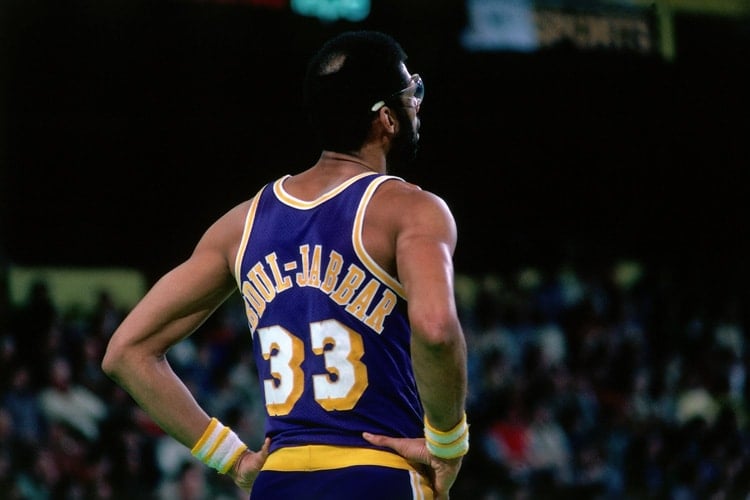
Image via NBA.com
Arguments for Kareem Abdul-Jabbar:
Kareem's greatness is often defined by having the most decorated resume in NBA history. He has 6 NBA Championships and a record 6 NBA MVPs. Standing at 7'2", Kareem unleashed the iconic skyhook, often cited as the most unstoppable shot in history, helping him become the NBA's all-time leading scorer for nearly 39 years until LeBron surpassed him in 2023. For decades, Kareem was the league's all-time leading scorer, and still ranks 3rd in rebounds, 3rd in blocks and 2nd in points all-time.
His impact is illustrated through his holding of the NBA's career Win Shares record at 273.4, meaning according to Basketball-Reference he's statistically contributed to more team wins than any player ever. Kareem was also a 19 time All Star, and a 2 time Finals MVP. Kareem checks every box, and it's hard to argue against the man who was near the top of the game for such a long time.
Arguments against Kareem Abdul-Jabbar:
If we were to nitpick Kareem's GOAT case, it often comes down to context and narrative. Critics point out that during the late 70s, his teams fell frequently short in the playoffs. It wasn't until a rookie Magic Johnson arrived in 1979-80 that the Lakers broke through, with Magic famously winning Finals MVP as a rookie, while Kareem was injured during the clinching game. Out of Kareem's 6 championships, only 2 saw him win Finals MVP, while 3 went to Magic (and 1 to James Worthy). This had led to a perception that Kareem was more of a 1B star in the latter part of his career, with Magic often running the show at crunch time.
By Kareem's final title in 1988, he was 40 and put up modest Finals numbers (13.1 points per game). Another factor is that his statistical profile doesn't show the all around versatility of a LeBron James for example. Kareem wasn't known as an assist man or a perimeter force, instead, he played strictly as a center. Lastly, his relatively quiet personality and the less-televised era of the 70s mean his greatness can be underappreciated in popular memory compared to some more charismatic stars.
4. Stephen Curry: Chef Curry

Image via NBA.com
Arguments for Stephen Curry:
Slight of build but immense in skill, Curry revolutionized basketball by turning the three-point shot from a novelty into a primary weapon for teams. He is widely regarded as the greatest shooter of all-time, and his stats back it up: Curry is the NBA's all-time leader in three-pointers made, having sunk over 4,000 threes in his career. In fact, he shattered the previous record (2,973 by Ray Allen) in 2021, and has kept adding to it, putting the number seemingly out of reach.
Curry was the first player to be unanimously voted MVP (2016), where he averaged 30.1 points per game, and joined the exclusive 50-40-90 shooting club (50% field goal percentage, 40% three-point percentage, 90% free throw percentage), all while leading his team to an NBA record 73-9 wins. Curry has 4 NBA championships, and in terms of sheer influence on the sport, Curry's case is as strong as anyone's.
Arguments against Stephen Curry:
While his impact is undeniable, his GOAT case faces a few limitations, primarily related to his longevity and two way impact. Curry came into the league at 21 and battled ankle injuries early on, meaning his cumulative stats are lower than many of the all-time greats. For example, his career point total (~26,000 as of this article) is well below contemporaries like LeBron or even Kobe. Curry has 4 championships but two of those (2017 and 2018) he was arguably the second-best player on his team, with Kevin Durant winning the Finals MVPs both times. Another critique is that Curry has never been an elite defender. Teams often tried to target Curry on his defense due to his size, whereas other GOAT candidates have multiple all-defensive selections.
Another blemish on his career includes the 2016 Finals, where his Warriors famously squandered a 3-1 lead to LeBron's Cavaliers, with Curry struggling at times and being outdueled by LeBron and Kyrie Irving in the last games. That loss, especially coming after the Warriors' record 73 win season, is a blemish that skeptics won't overlook. To some, Curry may be the greatest shooter ever, and maybe even the greatest point guard ever, but to most, his candidacy as the GOAT is slightly limited by his defense, late start to superstardom, and his potential second option role to Kevin Durant.
5. Kobe Bryant: The Black Mamba
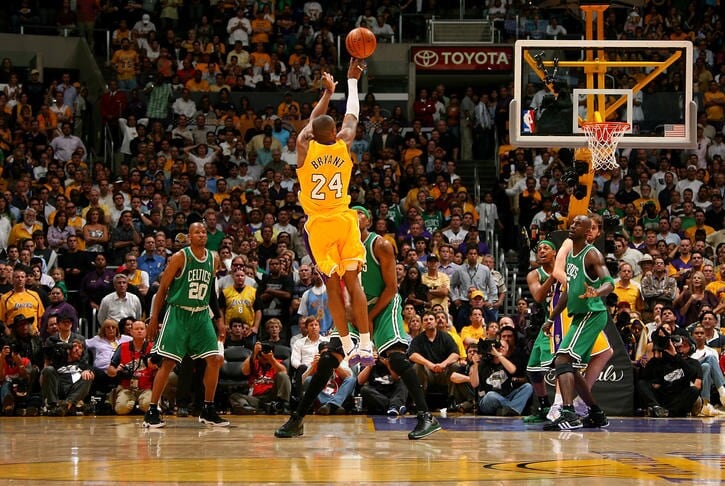
Image via NBA.com
Arguments for Kobe Bryant:
Few players approach the mythical status that Kobe Bryant achieved: a disciple of Michael Jordan's work ethic, and his moves. Kobe had built a Hall of Fame career defined by 5 NBA championships, 2 Finals MVPs, 15 All NBA teams and a whopping 18 All Star selections. His "Mamba mentality," where he would obsessively improve his craft and never fear the big moment became legendary, exemplified through moments like sinking free throws on a torn Achilles tendon. Kobe was arguably one of the most complete scorers ever, having an 81 point game (the second-highest scoring game ever), and being currently 4th on the NBA's all-time scoring list.
At his peak, he was an elite defender, making 12 All Defensive teams, choosing to take on the challenge of guarding the opponent's best perimeter player while also carrying the offensive load. Kobe was also valued as a clutch player, having the second most buzzer beaters in NBA history, only behind Michael Jordan. Fans of Kobe argue that if you value the killer instinct and clutch gene, Kobe may stand alone at the top.
Arguments against Kobe Bryant:
Kobe's legacy is so revered that it feels almost disrespectful to critique it, yet, there are a few areas where some legends outshine him. Efficiency is one: Kobe's career field goal percentage was 44.7%, notably lower than Jordan (49.7%) and even LeBron (50.5%). Part of this was Kobe's role, as he was often the team's primary shot creator and took difficult shots, but critics argue that sometimes his shot selection hurt his team's offensive efficiency. Kobe has a career PER of ~22.9 and a WS/48 of ~0.170, not even cracking the top thirty in either statistic.
Another common argument is that Kobe was not the clear best player on his team for all five titles: during the Lakers' early 2000 three-peat, Shaquille O'Neal won all three Finals MVPs. This contrasts with Jordan and LeBron, where they won the Finals MVP for all of their championships. Another consideration is that Kobe's teams had a couple of notable playoff disappointments: in 2004, the heavily favoured Lakers lost in the Finals, and his 2006 Lakers blew a 3-1 lead in the first round. A tough question Kobe fans have always had to answer was: "Why take Kobe over Jordan, when Jordan did everything a bit more efficiently and won more?"
A Reflection of Values
Ultimately, crowning a single "Greatest of All Time" is less a matter of finding an objective truth and more of an exercise in figuring out what one cherishes the most in the sport. Every one of the legends discussed carved out a unique legacy with different strengths, but none of the accolades, numbers, or narratives can capture everything. The intangibles, the era differences, the rule changes, and the quality of competition all factor in. Bill Russell's 11 rings came in an era of 8-14 teams, does that beat all modern feats? The debate invites these types of questions.
In the end, the GOAT debate endures because the right answer is that there is no single correct answer. The asterisks we put on each candidate aren't so much flaws as they are defining characteristics of their greatness. They mark boundaries of what each player did and did not achieve, and remind us that no player can do it all or win alone. Whether you pick Jordan, LeBron, Kareem, Curry, Kobe, or someone else, you're really revealing which qualities you value the most. And in that sense, the GOAT debate survives because greatness isn't a number, it's a perspective.